The global manufacturing industry is entering one of the most transformative periods in modern business history. Smart factories, industrial automation, AI-powered production systems, and advanced supply chain technologies are changing how companies build products and manage operations. Governments are investing heavily in manufacturing infrastructure, companies are reshoring production capabilities, and industries are racing to modernize their factories for the future economy. Yet, behind this wave of innovation lies a growing challenge that many leaders still underestimate. The manufacturing talent shortage is becoming the next big business risk.
For years, discussions around manufacturing focused heavily on automation, robotics, and operational efficiency. However, companies are now realizing that technology alone cannot solve every production problem. Machines may improve productivity, but businesses still need skilled workers who can manage systems, interpret data, maintain equipment, and lead industrial transformation. Unfortunately, the gap between manufacturing demand and available skilled talent continues to widen across global markets.
In 2026, manufacturers are struggling to hire technicians, engineers, plant managers, automation specialists, AI operators, and supply chain experts. Experienced workers are retiring rapidly while younger professionals are choosing careers in technology, finance, or digital industries instead of manufacturing. This shift is creating operational instability for companies that depend on industrial talent to maintain production quality and growth.
The manufacturing talent shortage is no longer just an HR problem. It is becoming a strategic business challenge affecting profitability, innovation, operational continuity, investor confidence, and economic competitiveness. Companies that fail to address workforce development may struggle to scale operations despite strong market demand.
In this article, we will explore why the manufacturing talent shortage is becoming one of the biggest risks for businesses in 2026. We will examine the causes behind the labor gap, the role of automation and AI, workforce transformation strategies, manufacturing recruitment trends, employee retention, leadership challenges, and the future of industrial talent development.
Also Read: How Healthcare Startups Can Scale Responsibly in 2026
Why Manufacturing Talent Shortage Is Becoming a Serious Business Risk
For decades, manufacturing was viewed as the backbone of industrial economies. Factories created stable employment opportunities, supported economic growth, and built strong middle-class communities. However, the perception of manufacturing careers has changed significantly over time.
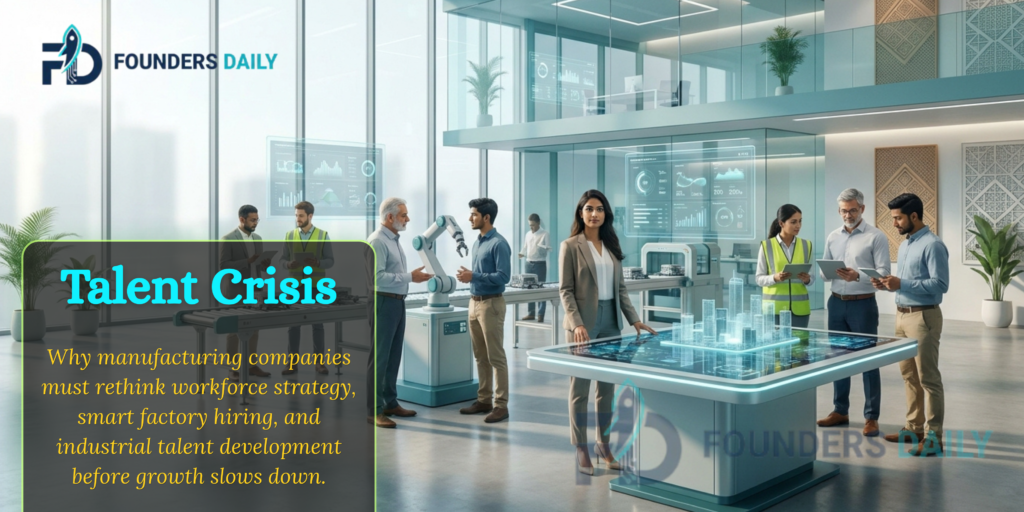
Many younger professionals still associate manufacturing with repetitive labor, outdated factory environments, and limited career growth. In reality, modern manufacturing facilities are increasingly technology-driven, data-focused, and innovation-oriented. Today’s smart factories use robotics, AI systems, predictive analytics, IoT devices, and cloud-based operational platforms. Yet the outdated perception continues affecting talent attraction across the industry.
The manufacturing talent shortage is creating direct operational consequences for businesses worldwide. Production delays, quality control issues, equipment downtime, and rising labor costs are becoming more common as companies struggle to fill critical positions.
For example, an automotive manufacturer may invest millions into advanced robotics systems, but without skilled automation engineers and maintenance specialists, production efficiency declines rapidly. Similarly, electronics manufacturers cannot scale advanced production lines without experienced technicians capable of operating precision equipment.
Another major issue is institutional knowledge loss. Many experienced manufacturing workers are reaching retirement age, taking decades of operational expertise with them. Companies that fail to transfer this knowledge to younger employees risk losing valuable production insights and process efficiency.
The shortage is also affecting innovation. Manufacturing companies rely heavily on engineering talent, industrial designers, and operational strategists to improve products and production systems. Without skilled teams, businesses struggle to remain competitive in global markets.
As supply chains become more complex and customer expectations rise, manufacturing companies need agile and highly skilled workforces more than ever before. The businesses that solve talent challenges early will gain a major competitive advantage in the future economy.
The Real Reasons Behind the Manufacturing Talent Gap
The manufacturing talent shortage did not appear overnight. It is the result of multiple long-term economic, educational, and demographic shifts happening simultaneously.
One of the biggest factors is workforce aging. Across industries like automotive manufacturing, heavy engineering, industrial equipment, and logistics, a large percentage of experienced workers are approaching retirement. Many companies underestimated how quickly this transition would impact operational capacity.
At the same time, younger generations are entering different industries. Technology startups, digital marketing agencies, SaaS companies, and remote work opportunities often appear more attractive than traditional industrial careers. Students are increasingly pursuing software engineering, finance, AI development, and content creation instead of manufacturing roles.
Education systems also contribute to the problem. In many countries, industrial training programs and vocational education have not evolved fast enough to match modern manufacturing requirements. Companies need workers skilled in robotics, industrial automation, AI systems, cybersecurity, and digital production tools, but many training institutions still focus on outdated manufacturing models.
Another major issue is the rapid pace of technological transformation. Manufacturing companies are adopting Industry 4.0 technologies faster than workers can adapt. Employees who were trained for traditional factory operations may lack expertise in smart manufacturing systems, predictive maintenance software, or digital supply chain analytics.
Global competition is intensifying the shortage further. Highly skilled manufacturing professionals are in demand worldwide. Large multinational corporations often attract top industrial talent with better compensation, advanced facilities, and global career opportunities, making it difficult for smaller manufacturers to compete.
The pandemic years also changed workforce expectations significantly. Employees today prioritize flexibility, work-life balance, career development, and workplace culture more than previous generations. Manufacturing companies that fail to modernize workplace environments may struggle to attract younger talent.
How Automation Is Changing Manufacturing Workforce Needs
Automation is transforming manufacturing at an unprecedented speed. Smart robotics, AI-powered systems, autonomous machinery, and predictive maintenance tools are helping companies improve productivity and reduce operational inefficiencies. However, automation is not eliminating the need for workers. Instead, it is changing the type of talent companies require.
Modern factories no longer depend solely on repetitive manual labor. They now require skilled professionals who understand robotics programming, machine learning systems, industrial data analysis, cybersecurity, and automated production optimization.
For example, a smart manufacturing facility may use AI-driven quality control systems capable of detecting production defects instantly. While automation improves efficiency, businesses still need trained professionals who can monitor algorithms, maintain systems, interpret analytics, and troubleshoot technical issues.
This shift is creating a major workforce transition challenge. Companies must reskill existing employees while also attracting digitally skilled professionals into manufacturing careers.
Some manufacturers are already adapting successfully. Leading industrial companies are partnering with universities, technical institutes, and online learning platforms to create specialized workforce training programs. These initiatives help bridge the gap between academic education and real-world manufacturing needs.
Automation is also increasing demand for hybrid talent. Companies now seek professionals who combine technical manufacturing expertise with digital capabilities. Engineers who understand AI systems, technicians skilled in IoT integration, and managers capable of interpreting operational analytics are becoming extremely valuable.
The future manufacturing workforce will not simply operate machines. It will manage intelligent industrial ecosystems powered by automation and data-driven decision-making.
The Rising Cost of Ignoring Manufacturing Workforce Development
Many companies still treat workforce development as a secondary business priority. However, ignoring manufacturing talent shortages can become extremely expensive over time.
One of the biggest risks is operational disruption. Factories with insufficient staffing often experience production bottlenecks, delayed shipments, and reduced product quality. These problems directly affect customer satisfaction and profitability.
Recruitment costs are also increasing rapidly. Companies competing for limited industrial talent must offer higher salaries, signing bonuses, relocation packages, and advanced employee benefits to attract qualified professionals.
Employee burnout creates another challenge. Existing workers often carry heavier workloads when positions remain unfilled for long periods. Overworked teams experience lower morale, reduced productivity, and higher turnover rates, creating a damaging cycle.
Manufacturing talent shortages also slow innovation. Businesses focused entirely on daily operational survival struggle to invest time and resources into long-term process improvements or product development.
Cybersecurity risks are growing too. As manufacturing systems become more connected digitally, companies need skilled cybersecurity professionals capable of protecting industrial infrastructure from cyber threats. A shortage of qualified talent increases operational vulnerability significantly.
Investor confidence may also decline when companies demonstrate weak workforce strategies. Investors increasingly evaluate workforce sustainability, leadership planning, and operational resilience when assessing manufacturing businesses.
Forward-thinking companies now view workforce investment as a growth strategy rather than an operational expense. Talent development directly supports innovation, scalability, and long-term competitiveness.
How Manufacturing Companies Can Attract Younger Talent
One of the most important challenges facing the industry is changing how manufacturing careers are perceived by younger generations.
Many students and young professionals are unaware of how advanced modern manufacturing has become. They often imagine dark factory floors and repetitive labor instead of AI-powered production systems, robotics labs, digital engineering, and smart industrial ecosystems.
Manufacturing companies must improve employer branding significantly. Businesses should showcase innovation, technology integration, sustainability efforts, career growth opportunities, and modern workplace environments through digital content and recruitment campaigns.
Social media platforms are becoming important recruitment tools for industrial companies. Behind-the-scenes factory tours, employee stories, technology demonstrations, and leadership insights help younger audiences understand the future potential of manufacturing careers.
Partnerships with universities and technical institutes are equally important. Companies that engage students early through internships, apprenticeships, workshops, and industrial training programs build stronger future talent pipelines.
Flexible career development opportunities also matter. Younger professionals value continuous learning, mentorship, and skill advancement. Manufacturers that invest in employee growth programs often achieve better retention outcomes.
Workplace culture is another major factor. Today’s workforce expects inclusive, collaborative, and supportive environments. Manufacturing businesses that modernize leadership styles and prioritize employee well-being become more attractive employers.
The industry must stop presenting manufacturing as purely operational work. Modern manufacturing is increasingly becoming a technology-driven innovation sector.
Leadership and Workforce Transformation in Manufacturing
Strong leadership is essential during periods of industrial transformation. Manufacturing executives today face the difficult challenge of balancing operational efficiency, digital modernization, and workforce development simultaneously.
Leaders must create long-term workforce strategies rather than relying only on short-term recruitment solutions. Hiring alone cannot solve the manufacturing talent shortage. Companies need sustainable systems for skill development, knowledge transfer, leadership training, and workforce engagement.
Transparency also matters. Employees are more likely to adapt to technological changes when leadership communicates openly about business goals and transformation plans.
Successful manufacturers often involve employees directly in digital transformation initiatives. Workers who feel included in innovation processes are more motivated to learn new skills and support organizational change.
Leadership teams must also embrace diversity in manufacturing. Diverse workforces improve creativity, operational problem-solving, and innovation outcomes. Expanding opportunities for women, underrepresented groups, and younger professionals strengthens long-term workforce sustainability.
Another important leadership priority is continuous learning culture. Manufacturing companies should encourage employees to update skills regularly through certifications, workshops, and technical training programs.
The future manufacturing leaders will not only manage production targets. They will build adaptive organizations capable of evolving alongside technology and workforce expectations.
The Future of Manufacturing Talent in 2026 and Beyond
The manufacturing industry is entering a new era where human talent and technology will become deeply interconnected. AI, robotics, industrial automation, and smart analytics will continue reshaping factories worldwide, but skilled people will remain at the center of industrial success.
Companies that invest early in workforce transformation will build stronger operational resilience and competitive advantages. Businesses that ignore talent development may face rising labor shortages, slower innovation, and declining productivity.
Governments are also beginning to recognize the importance of industrial workforce investment. Many countries are expanding vocational education programs, manufacturing incentives, and technical skill development initiatives to support future economic growth.
The manufacturing companies that succeed in the next decade will likely be those that combine advanced technology with strong human capital strategies. They will create environments where innovation, learning, and operational excellence work together.
Manufacturing talent shortages may appear like an HR issue on the surface, but they represent something much bigger. They are a signal that industrial transformation requires both machines and people evolving together.
The future factory will not simply be automated. It will be intelligent, collaborative, and deeply dependent on skilled human expertise.
Also Read: Manufacturing Growth India: The Real Engine Behind India’s Next Economic Leap
Conclusion
The manufacturing talent shortage is quickly becoming one of the most significant business risks of the modern industrial economy. While companies continue investing in automation, AI, and digital transformation, the human workforce remains critical to operational success and innovation.
Manufacturers that prioritize workforce development, leadership transformation, employee well-being, and modern recruitment strategies will position themselves for long-term growth. Those that ignore the changing workforce landscape may struggle to compete despite having advanced technology and strong market demand.
The future of manufacturing will not depend only on smarter machines. It will depend on smarter workforce strategies.
Businesses that understand this shift today will lead the next generation of global manufacturing innovation.