
Introduction
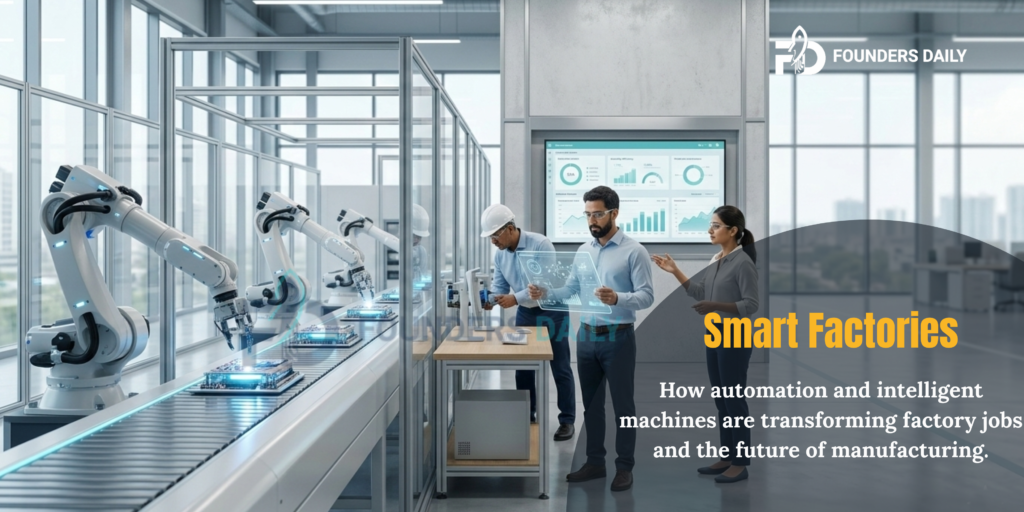
Walk into a modern manufacturing plant today and you will notice something very different from what factories looked like twenty years ago. The loud rows of manual machines are slowly being replaced by intelligent robotic systems, AI driven software, and connected equipment that can run entire production lines with minimal human intervention. This transformation is not just about machines becoming smarter. It represents a much deeper shift in how industries operate and how people work.
Factory automation is now one of the most powerful forces reshaping global manufacturing. From automotive assembly lines to electronics production and even food processing plants, automation in manufacturing is changing job roles, productivity levels, and the overall economics of production. Companies are investing heavily in industrial automation technologies because they improve efficiency, reduce operational costs, and maintain consistent product quality.
However, the conversation about factory automation often raises an important question. If machines are becoming capable of performing tasks once handled by humans, what will happen to factory jobs in the future?
The reality is far more complex than the common fear that automation simply replaces workers. In many cases, factory automation is not eliminating jobs but transforming them. Workers are shifting from repetitive manual tasks to more technical, supervisory, and analytical roles. Manufacturing companies now require employees who can manage automated systems, interpret machine data, and optimize production processes.
In this article we will explore how factory automation is redefining factory jobs, why businesses are adopting automation at such a rapid pace, and what this shift means for the future of work in manufacturing. By understanding the real impact of automation in manufacturing, workers, business leaders, and policymakers can better prepare for the next phase of industrial transformation.
Also Read: India’s Manufacturing Reset for Global Markets: A Structural Shift in Global Supply Chains
The Rise of Factory Automation in Modern Manufacturing
The rapid growth of factory automation is closely linked to technological advancements in robotics, artificial intelligence, cloud computing, and industrial Internet of Things systems. Over the past decade these technologies have become more affordable and accessible, allowing even mid sized manufacturers to implement automation solutions.
Industrial automation trends show that companies are no longer automating just a single process. Instead they are redesigning entire production ecosystems. Machines are connected through smart networks, allowing factories to operate as intelligent systems where equipment communicates with each other in real time. This connected approach improves efficiency and helps businesses quickly identify bottlenecks or production errors.
Another important driver behind automation in manufacturing is global competition. Manufacturers are constantly under pressure to produce goods faster and at lower costs while maintaining high quality standards. Factory automation allows businesses to achieve this balance by reducing manual errors and ensuring consistent output across large production volumes.
For example the automotive industry has become one of the most automated sectors in manufacturing. Robots now perform welding, painting, and precision assembly tasks with incredible accuracy. While these tasks were once handled by large teams of workers, automation has allowed manufacturers to scale production without compromising quality.
Yet automation does not mean that humans are disappearing from factories. Instead human workers are taking on roles that require judgment, creativity, and technical expertise. This shift highlights how factory automation is redefining factory jobs rather than simply replacing them.
Why Businesses Are Investing in Automation in Manufacturing
Companies across the world are adopting factory automation because the benefits go far beyond cost savings. Modern automation systems provide a strategic advantage in an increasingly competitive manufacturing landscape.
One major benefit of factory automation is operational efficiency. Automated machines can operate continuously with minimal downtime. Unlike manual production processes, automated systems maintain consistent speed and accuracy throughout the entire production cycle. This consistency helps manufacturers reduce defects and improve product quality.
Another key factor driving automation in manufacturing is data. Modern automated equipment generates large amounts of production data. This information allows companies to analyze performance in real time and make data driven decisions that improve efficiency. Managers can quickly identify inefficiencies, predict equipment failures, and optimize workflows.
Labor shortages have also played a major role in accelerating factory automation. Many manufacturing industries struggle to find workers willing to perform repetitive or physically demanding tasks. Automation helps fill these gaps while allowing companies to reassign employees to more skilled positions within the factory environment.
There is also a safety dimension to industrial automation trends. Automated systems can perform dangerous tasks such as handling hazardous materials or working in extreme temperatures. By reducing human exposure to risky environments, factory automation improves workplace safety and reduces the likelihood of accidents.
As a result of these advantages automation in manufacturing has become a core strategy for companies that want to remain competitive in the global market.
How Factory Automation Is Changing Factory Jobs
One of the biggest misconceptions about factory automation is the belief that it will eliminate the need for human workers. While certain manual roles are declining, the overall picture shows that automation is reshaping jobs rather than destroying them.
Modern factories require workers who can operate advanced equipment, analyze production data, and maintain automated systems. This shift has created new categories of jobs that did not exist in traditional manufacturing environments.
For instance technicians who specialize in robotics maintenance are now essential in automated factories. These professionals ensure that robotic systems operate efficiently and quickly resolve any technical issues that could disrupt production. Similarly data analysts play a growing role in manufacturing by interpreting machine generated data and identifying opportunities to improve performance.
Another emerging role is automation engineer. These professionals design and implement automation systems that integrate robotics, sensors, and software platforms into the manufacturing process. As factory automation becomes more sophisticated the demand for these skills continues to grow.
In many cases workers who previously performed manual tasks are being retrained to handle these new responsibilities. Companies are investing in workforce development programs that teach employees how to operate automated equipment and manage digital manufacturing systems.
This transition illustrates an important reality. Automation in manufacturing does not remove people from factories. Instead it elevates their roles by shifting focus from physical labor to technical expertise and strategic decision making.
The Human Skills That Automation Cannot Replace
While machines are becoming more capable, certain human abilities remain extremely difficult to replicate through automation. These skills are becoming more valuable as factory automation expands across industries.
Critical thinking is one of the most important human strengths in modern manufacturing. Automated systems can process data and perform repetitive tasks efficiently. However they still rely on human judgment to interpret complex situations and make strategic decisions when unexpected issues arise.
Creativity is another skill that automation cannot easily replicate. Manufacturing innovation often requires imaginative problem solving and new approaches to product design or production methods. Human workers bring unique perspectives that machines simply cannot generate on their own.
Collaboration also plays a crucial role in modern factories. Production environments involve coordination between engineers, technicians, managers, and supply chain professionals. Effective communication and teamwork ensure that automated systems operate smoothly within the broader manufacturing ecosystem.
Emotional intelligence remains an essential human advantage as well. Leaders in manufacturing must motivate teams, manage change, and guide employees through technological transitions. These responsibilities require empathy and leadership skills that automation cannot provide.
As factory automation continues to evolve the most successful workers will be those who combine technical knowledge with these uniquely human capabilities.
Real World Examples of Automation Transforming Manufacturing
The impact of factory automation becomes clearer when we look at real world examples from different industries. Many companies have successfully integrated automation into their operations while creating new opportunities for their workforce.
In the electronics manufacturing sector automated assembly lines have dramatically increased production speed. Companies that produce smartphones and consumer electronics rely on robotic systems to place tiny components with extreme precision. Human workers now supervise these systems and ensure quality control throughout the process.
The food processing industry has also embraced automation in manufacturing. Automated packaging systems can sort, label, and seal products far more efficiently than manual methods. Workers who once handled repetitive packaging tasks now oversee machine operations and manage production schedules.
Even smaller manufacturers are benefiting from industrial automation trends. Cloud based automation tools allow businesses to monitor factory performance from remote locations. Managers can track production metrics in real time and respond quickly to operational issues.
These examples demonstrate that factory automation is not limited to large multinational corporations. Companies of all sizes are using automation technologies to improve efficiency and remain competitive in their markets.
Preparing the Workforce for the Future of Factory Jobs
As automation continues to reshape manufacturing, preparing workers for the future of factory jobs has become a critical priority. Governments, educational institutions, and businesses must work together to ensure that employees have the skills required for an automated industrial environment.
Training programs focused on robotics, data analysis, and digital manufacturing technologies are becoming increasingly important. Many technical schools and universities are developing specialized courses that prepare students for careers in automated factories.
Companies are also investing in internal training initiatives. Employees who previously worked in manual production roles are being trained to operate and maintain automated systems. This approach allows businesses to retain experienced workers while equipping them with new skills that match modern manufacturing needs.
Continuous learning is essential in a world where industrial automation trends evolve rapidly. Workers must stay updated with new technologies and develop the ability to adapt to changing job requirements.
By focusing on education and skill development the manufacturing sector can ensure that automation becomes a tool for economic growth rather than a source of job displacement.
The Economic Impact of Factory Automation
Factory automation is not only transforming individual workplaces. It is also influencing global economic trends. Countries that invest heavily in automation technologies often experience higher productivity levels and stronger manufacturing sectors.
Automation in manufacturing allows businesses to produce goods more efficiently, which can lower production costs and increase profitability. This improvement in efficiency helps companies remain competitive in international markets.
However automation also requires careful economic planning. Policymakers must ensure that workers who are affected by technological changes receive adequate training and support. By investing in workforce development programs governments can help workers transition into new roles within automated industries.
Another economic benefit of factory automation is the creation of high skilled jobs. Positions such as robotics engineers, automation technicians, and data specialists are becoming increasingly common in modern manufacturing environments. These roles often offer higher wages and long term career opportunities.
As automation continues to evolve its economic impact will depend largely on how effectively societies manage the transition toward more technologically advanced manufacturing systems.
Also Read: Manufacturing is Moving from Siloed Tools to Integrated Platforms
Conclusion
Factory automation is transforming the manufacturing world at an unprecedented pace. Instead of simply replacing human workers, automation in manufacturing is redefining the roles people play inside factories. Workers are moving away from repetitive manual labor and toward more technical, analytical, and strategic responsibilities.
Businesses that adopt factory automation gain efficiency, improved product quality, and stronger competitiveness in global markets. At the same time workers who invest in new skills can find exciting opportunities in modern manufacturing environments.
The future of factory jobs will not be defined by machines alone. It will be shaped by how effectively humans and technology collaborate. Companies, educators, and governments must work together to ensure that the workforce is ready for this new era of industrial innovation.
Automation is not the end of factory jobs. It is the beginning of a smarter and more advanced manufacturing ecosystem where human talent and intelligent machines work side by side.