
Introduction
In the fast-moving world of startups, most founders begin their journey with a clear and often intense ambition. They want to build something big, raise funding, scale quickly, and eventually achieve a successful exit. While this approach may work for a few, the reality in 2026 is far more complex. Markets are evolving faster, investor expectations are changing, and the pressure on founders has never been higher. This is where the concept of founder longevity becomes not just relevant, but essential.
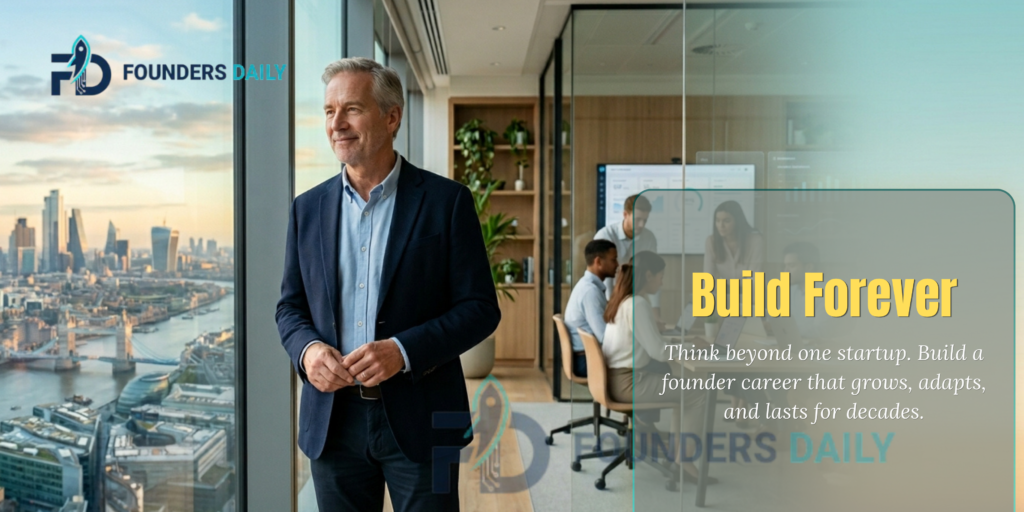
Founder longevity is about thinking beyond a single company. It is about building a long-term career as a founder, where each venture, success, or failure contributes to your growth and relevance in the ecosystem. Instead of focusing only on short-term wins, founders today must build sustainable systems, strong personal foundations, and adaptable strategies that allow them to stay in the game for decades. In this article, we will explore what founder longevity truly means, why it matters in today’s startup landscape, and how you can build a career that outlasts any single company.
Also Read: AI Governance Is Becoming a Boardroom Priority in 2026
Understanding Founder Longevity in the Modern Startup Ecosystem
Founder longevity is not just about survival. It is about sustained impact over time. In 2026, the startup ecosystem is no longer driven by hype alone. Investors are more cautious, customers are more informed, and competition is global from day one. In such an environment, founders who think long term have a clear advantage.
When you adopt a founder longevity mindset, your decisions begin to change. You stop chasing vanity metrics and start focusing on real value creation. You understand that building a business is not just about rapid growth, but about resilience, adaptability, and consistency. This shift in thinking allows you to navigate uncertainty with confidence and clarity.
For example, many founders who started companies during the funding boom years struggled when the market corrected. Those who had built sustainable models and maintained financial discipline were able to survive and even thrive. This is the power of founder longevity. It prepares you not just for growth phases, but also for downturns.
Why the Traditional Startup Mindset Is Failing Founders
The Pressure of Instant Success
The traditional startup narrative often glorifies rapid success. Founders are expected to scale quickly, raise multiple funding rounds, and dominate their market in a short span of time. While this sounds exciting, it creates immense pressure and unrealistic expectations.
In reality, building a successful company takes time. It requires experimentation, learning, and iteration. Founders who chase instant success often make rushed decisions that can harm the business in the long run. They may overhire, overspend, or expand too quickly without a solid foundation.
Identity Tied to a Single Startup
Another major challenge is how deeply founders tie their identity to their company. When everything revolves around one venture, any setback feels personal. If the startup struggles or fails, it can lead to a loss of confidence and direction.
Founder longevity offers a healthier perspective. It encourages founders to see themselves as long-term builders rather than one-time entrepreneurs. This shift reduces emotional pressure and allows for more balanced decision-making.
Building a Long-Term Founder Mindset
At the core of founder longevity lies a strong and adaptable mindset. Founders who succeed over the long term are not necessarily the smartest or the most funded. They are the ones who continuously learn, adapt, and evolve.
A long-term founder mindset means accepting that success is not linear. There will be highs and lows, wins and losses. What matters is how you respond to these experiences. Instead of focusing only on outcomes, you begin to value the process. You pay attention to how decisions are made, how teams are built, and how problems are solved.
For instance, a founder who has experienced a failed product launch but understands why it failed gains a valuable advantage. That knowledge can be applied in future ventures, reducing the chances of repeating the same mistakes. Over time, these learnings compound and create a strong foundation for sustained success.
The Role of Health in Founder Longevity
Founder longevity is not just about business strategy. It is also deeply connected to personal well-being. The demands of building a startup can be intense, often leading founders to neglect their health. Long hours, constant stress, and lack of balance can quickly lead to burnout.
In 2026, there is a growing awareness that health is a critical factor in long-term success. Founders who prioritize their physical and mental well-being are better equipped to handle challenges and make clear decisions. They have the energy and focus needed to sustain high performance over time.
Simple habits can make a significant difference. Regular exercise, proper sleep, and structured work routines help maintain consistency. Taking time to disconnect and recharge is equally important. Founder longevity depends on your ability to stay strong, both mentally and physically, over the long run.
Financial Discipline as a Foundation for Longevity
One of the most overlooked aspects of founder longevity is financial discipline. Many founders focus entirely on raising funds without paying enough attention to how that capital is used. This often leads to unsustainable growth and increased dependency on external funding.
A founder who understands financial discipline approaches business differently. They focus on building strong unit economics, managing costs effectively, and creating sustainable revenue streams. This approach not only strengthens the business but also reduces stress during challenging times.
Personal financial stability is equally important. Founders who have some level of financial security can make better decisions without being driven by immediate pressure. They can take calculated risks and focus on long-term goals rather than short-term survival.
Relationships and Reputation in the Founder Journey
Over time, relationships become one of the most valuable assets a founder can have. The startup ecosystem thrives on trust, collaboration, and shared experiences. Founders who invest in building genuine relationships create opportunities that go beyond a single venture.
Investors are more likely to back founders they trust. Talented professionals prefer to work with leaders who have a strong reputation. Partners and collaborators are more willing to engage when there is credibility involved. All of this contributes to founder longevity.
Reputation, however, takes time to build and can be easily damaged. Consistency, transparency, and ethical decision-making play a crucial role in maintaining a strong reputation. Founders who prioritize these values create a lasting impact that extends across multiple ventures.
Adapting to Change and Staying Relevant
The ability to adapt is one of the defining traits of long-term founders. Technology is evolving rapidly, and new business models are emerging constantly. What works today may not work tomorrow. Founder longevity depends on your willingness to learn and evolve.
Continuous learning is no longer optional. Founders must stay updated with industry trends, emerging technologies, and changing customer expectations. This does not mean chasing every new trend, but rather understanding which changes are relevant and how they can be leveraged.
Developing transferable skills is equally important. Skills like leadership, communication, and strategic thinking remain valuable across industries. These skills enable founders to pivot when needed and explore new opportunities with confidence.
Learning From Failure and Building Resilience
Failure is an inevitable part of the entrepreneurial journey. However, it is often misunderstood. Many see failure as a sign of incompetence, when in reality, it is a powerful learning tool.
Founder longevity requires a different approach to failure. Instead of avoiding it, founders must learn how to analyze and extract insights from it. Each failure provides valuable information about what works and what does not. This knowledge becomes a key asset in future ventures.
Resilience plays a crucial role here. It is the ability to recover from setbacks and keep moving forward. Founders who develop resilience are better prepared to handle uncertainty and maintain momentum even during difficult times.
Expanding Beyond a Single Venture
Founder longevity is not limited to building one company. Many successful founders explore multiple avenues over time. They may start new ventures, invest in startups, mentor other founders, or take on advisory roles.
This diversification creates additional growth opportunities and reduces dependency on a single outcome. It also allows founders to leverage their experience in different ways, contributing to the broader ecosystem.
Building a personal brand further strengthens this approach. A strong presence in the industry enhances credibility and attracts new opportunities. In today’s digital world, founders who share insights and experiences can establish themselves as thought leaders, further extending their influence.
Also Read: Leadership in Remote and Hybrid Organizations
Conclusion
Founder longevity is the foundation of sustainable success in the modern startup ecosystem. It shifts the focus from short-term achievements to long-term growth, from a single company to an entire career. In a world where change is constant and competition is intense, this mindset provides stability and direction.
The founders who will thrive in 2026 and beyond are not just the ones who build successful startups. They are the ones who build themselves. They invest in their skills, health, relationships, and reputation. They learn from every experience and continue to evolve.
If you are building a startup today, take a step back and think about your journey as a whole. Your current venture is just one chapter. The real goal is to build a career that lasts, adapts, and grows with time. That is the true meaning of founder longevity.