
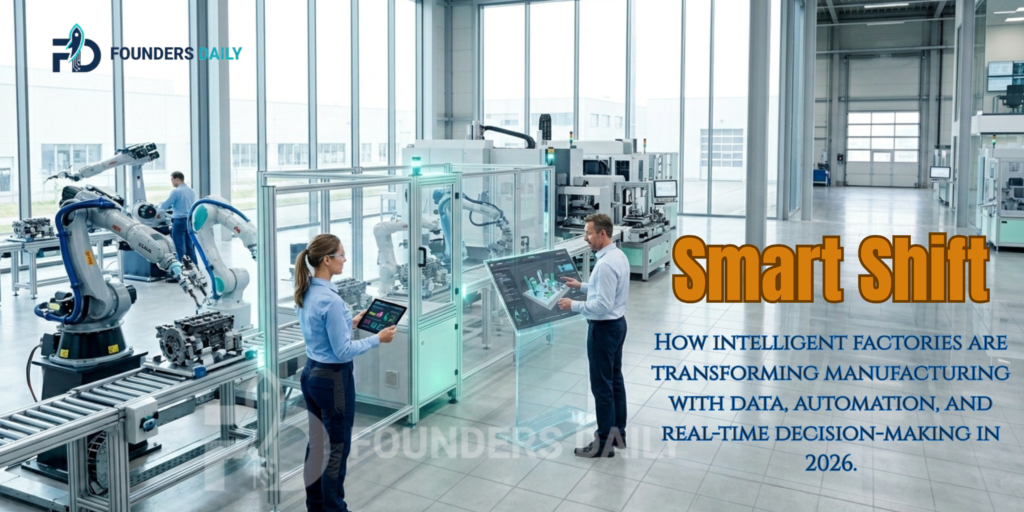
The rhythmic clanging of heavy machinery and the smell of industrial grease have long defined the heart of the manufacturing world. For decades, the factory floor was a place of brute force and manual oversight, where success was measured by the sheer volume of physical output and the endurance of the workforce. However, as we move deeper into 2026, a profound transformation is sweeping through the industrial landscape. The traditional assembly line is no longer just a series of mechanical steps but is evolving into a living, breathing ecosystem of data and intelligence. This shift toward smart factories represents the most significant leap in production technology since the first steam engine hissed to life. It is a movement driven by the need for unprecedented efficiency, sustainability, and the ability to pivot in an increasingly volatile global market.
The concept of a smart factory goes far beyond simply adding a few robots to a production line. It is about the complete integration of physical systems with digital intelligence, creating a loop where machines communicate with each other and make real-time decisions without human intervention. For business owners and factory managers, this transition can feel overwhelming. The technical jargon of Industry 4.0 often masks the practical reality that smart manufacturing is about solving age-old problems like downtime, waste, and quality control. In this article, we will explore the intricate layers of the manufacturing sector’s shift toward smart factories, looking at the technologies driving this change and how companies are successfully navigating this digital frontier to stay competitive in a high-stakes economy.
Also Read: Leadership Under Pressure: How Great Leaders Make Decisions With Incomplete Data
Understanding the Foundation of Smart Manufacturing Systems
At the core of every smart factory lies the concept of connectivity. In the past, a milling machine or an injection molder operated in a vacuum, only providing data when a human operator manually checked its gauges. Today, the manufacturing sector’s shift toward smart factories is built upon the Industrial Internet of Things (IIOT). This network of sensors and actuators allows every piece of equipment to broadcast its health, speed, and output quality to a centralized cloud system. When we talk about connectivity, we are describing a digital nervous system that links the supply chain to the shop floor and eventually to the end consumer. This level of transparency is what allows a factory in 2026 to detect a microscopic flaw in a component before it even leaves the assembly line.
The integration of artificial intelligence is the second pillar of this foundation. While IIOT provides the data, AI provides the “brain” to make sense of it. In a smart factory, AI algorithms analyze patterns that are invisible to the human eye. For instance, a subtle vibration in a motor might suggest that a bearing is likely to fail in three days. Instead of waiting for a breakdown that halts production for hours, the system automatically schedules maintenance during a planned shift change. This predictive capability is a game-changer for profitability, as it virtually eliminates the catastrophic costs of unplanned downtime. It is this shift from reactive to proactive management that defines the modern industrial era.
The Role of Digital Twins in Modern Production Planning
One of the most fascinating developments in the manufacturing sector’s shift toward smart factories is the use of digital twins. A digital twin is a virtual replica of a physical asset, process, or even an entire factory floor. By creating a digital counterpart, engineers can run thousands of simulations to see how a new product design will impact the production line before a single piece of raw material is touched. This reduces the risk of expensive errors and allows for rapid prototyping that was previously impossible. Imagine being able to “test drive” a factory upgrade in a virtual environment to ensure that every robotic arm and conveyor belt is synchronized to the millisecond.
Digital twins also play a vital role in training and remote operations. In our current landscape, finding highly skilled labor is a constant challenge for the manufacturing industry. With a digital twin, new technicians can practice complex repairs in a virtual reality setting, gaining experience without the risk of damaging expensive equipment. Furthermore, experts located halfway across the world can log into the digital twin of a specific machine to troubleshoot issues in real-time. This democratization of expertise is breaking down geographical barriers and ensuring that smart factories can maintain peak performance regardless of where their top talent is located.
Enhancing Sustainability Through Intelligent Resource Management
As global regulations regarding carbon footprints and energy consumption become more stringent, the manufacturing sector’s shift toward smart factories is proving to be a powerful tool for sustainability. Traditional factories are notorious for their high energy waste, often keeping machines idling or heating entire floors unnecessarily. Smart factories utilize intelligent energy management systems that adjust power consumption based on real-time demand. Sensors can detect when a machine is not in use and switch it to a low-power state, or they can shift energy-intensive tasks to hours when renewable energy sources like wind or solar are most abundant.
Beyond energy, smart manufacturing significantly reduces material waste. Through the use of computer vision and high-precision sensors, quality control becomes a continuous process rather than a final check. If a machine begins to drift out of calibration, the system detects the deviation immediately and self-corrects. This prevents the production of thousands of defective units that would otherwise end up in a landfill. By optimizing the use of raw materials and reducing the scrap rate, companies are not only hitting their ESG (Environmental, Social, and Governance) targets but are also seeing a direct improvement in their bottom-line margins.
The Human Element in an Automated Industrial World
A common fear when discussing the manufacturing sector’s shift toward smart factories is the displacement of human workers. However, the reality in 2026 is that the role of the human worker is evolving rather than disappearing. We are seeing a shift toward “cobotics,” where humans and robots work side-by-side. Robots handle the repetitive, dangerous, and physically taxing tasks, while humans focus on high-level problem solving, creative design, and system oversight. The factory worker of the future is more likely to carry a tablet than a wrench, using data visualizations to manage a fleet of autonomous systems.
This transition requires a massive upskilling effort across the industry. Companies that are leading the way in smart manufacturing are investing heavily in their people, teaching them how to interpret data and manage complex software interfaces. This human-centric approach to automation ensures that the workforce remains engaged and valuable. In fact, many employees find that working in a smart factory is more rewarding, as it removes the drudgery of manual labor and replaces it with roles that require critical thinking and technical expertise. The synergy between human intuition and machine precision is what truly makes a factory “smart.”
Overcoming the Challenges of Cyber Security and Integration
Despite the many benefits, the manufacturing sector’s shift toward smart factories is not without its hurdles. One of the primary concerns for any connected enterprise is cyber security. When every machine is connected to the internet, the factory becomes a potential target for hackers. A breach could result in stolen intellectual property or, worse, the remote shutdown of production lines. This has led to the rise of specialized industrial cyber security protocols that treat every sensor as a potential entry point. Modern smart factories use “zero trust” architectures and encrypted communication channels to ensure that their digital borders remain secure.
Another challenge lies in the integration of legacy equipment. Most manufacturing plants are not built from scratch; they are a patchwork of old and new machines. Getting a thirty-year-old hydraulic press to talk to a cutting-edge AI cloud is a complex engineering task. This has given rise to the “edge computing” market, where small devices are attached to older machines to translate their analog signals into digital data. This incremental approach allows companies to transition into the smart factory model without having to replace their entire infrastructure at once. It is a journey of evolution, not just a single moment of revolution.
Also Read: 2026 Funding Landscape: What VCs Are Actually Betting On
Conclusion: Embracing the Future of Industrial Intelligence
The manufacturing sector’s shift toward smart factories is more than just a trend; it is a fundamental reimagining of how goods are created and delivered to the world. By embracing connectivity, artificial intelligence, and a commitment to sustainability, manufacturers are building resilient operations that can survive the uncertainties of the 21st century. The journey toward a fully autonomous factory floor is a marathon, requiring a strategic balance of technological investment and human empowerment. As we look toward the future, the companies that thrive will be those that view their production lines not as static assets, but as dynamic, data-driven engines of innovation.
The time to begin this transition is now. Whether it starts with a single sensor on a critical machine or a full-scale digital twin of a production facility, the path to the future is paved with data. As an industry, we must continue to push the boundaries of what is possible, ensuring that our factories are not just faster and cheaper, but smarter and more responsible. The industrial revolution was about the power of the machine; the smart factory revolution is about the power of information. Let’s lead the way into this new era of intelligent manufacturing together.