Why the Future of Workplace Leadership Will Depend on Understanding Different Generations
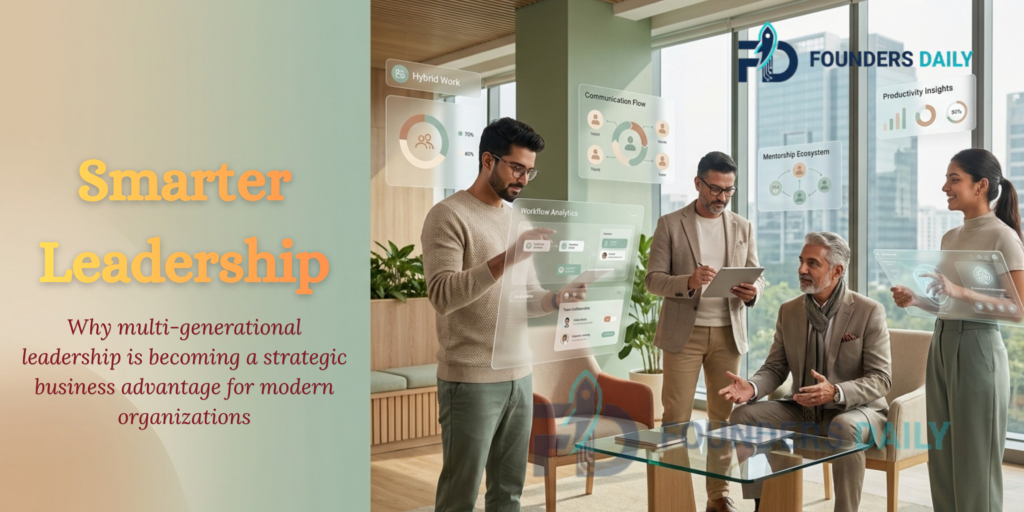
The modern workplace is experiencing one of the biggest cultural transformations in business history. For the first time, organizations across industries are managing teams where four generations are working together simultaneously. Inside one office, a senior executive with decades of corporate experience may collaborate daily with Gen Z professionals who entered the workforce during the rise of artificial intelligence, remote work, and digital-first communication. This shift is redefining leadership, workplace culture, communication, and employee expectations at every level of business.
For years, companies built leadership structures around standardized management styles. Most organizations expected employees to adapt to existing workplace systems regardless of personal communication preferences, career expectations, or technological comfort levels. That model is becoming increasingly ineffective in 2026 because today’s workforce is far more diverse in how people think, communicate, collaborate, and define professional success.
Leading multi-generational teams is no longer simply an HR discussion. It has become a strategic business priority. Companies are realizing that workplace performance is deeply connected to how effectively leaders manage generational diversity, emotional intelligence, communication flexibility, and evolving employee expectations. Businesses that fail to adapt are facing rising employee turnover, communication breakdowns, reduced engagement, and growing workplace disconnect between leadership teams and younger professionals.
At the same time, organizations that successfully manage multi-generational teams are building stronger cultures, healthier collaboration, higher retention rates, and more sustainable long-term growth. Different generations bring different experiences, perspectives, and problem-solving approaches. When leadership creates an environment where those perspectives work together instead of against each other, organizations often become more innovative, adaptable, and resilient.
The future of leadership will not depend only on operational efficiency or technical expertise. It will depend on understanding human behavior across generations and creating workplaces where employees of different ages feel respected, valued, and aligned around a shared purpose.
Also Read: Customer Retention Will Matter More Than Acquisition in 2026
Why Multi-Generational Teams Are Becoming the New Workplace Reality
Several global workforce shifts are contributing to the rise of multi-generational teams across industries. Economic uncertainty, increasing life expectancy, delayed retirement patterns, and changing career structures are keeping experienced professionals in the workforce longer than previous generations. At the same time, younger employees are entering workplaces earlier through startup ecosystems, digital entrepreneurship, freelance work, and remote-first employment models.
As a result, businesses now commonly manage teams that include Baby Boomers, Generation X, Millennials, and Generation Z professionals working side by side.
Each generation was shaped by different economic conditions, cultural environments, educational systems, and technological revolutions. Those experiences influence how employees communicate, solve problems, approach leadership, and define workplace success.
Baby Boomers often value organizational loyalty, structured leadership, and long-term career stability because they built careers during periods where consistent employment was heavily rewarded. Generation X professionals tend to emphasize independence, adaptability, and practical problem-solving because they experienced major transitions during the rise of globalization and digital transformation.
Millennials significantly changed workplace culture by introducing stronger expectations around flexibility, collaboration, feedback systems, and purpose-driven work. Generation Z professionals are now accelerating that shift further through digital fluency, entrepreneurial thinking, transparency expectations, and stronger focus on work-life integration.
These differences are not weaknesses. They represent diverse professional experiences that can strengthen businesses when managed effectively.
However, many organizations still struggle because traditional leadership systems were designed for far more uniform workplaces. Modern leaders can no longer assume that every employee communicates the same way, responds to motivation similarly, or defines career success through identical standards.
The organizations succeeding in 2026 are the ones adapting leadership strategies to support workforce diversity instead of resisting it.
Communication Gaps Are Becoming One of the Biggest Workplace Challenges
One of the most visible challenges in leading multi-generational teams involves communication differences between generations.
Older professionals often prefer structured meetings, detailed reporting systems, emails, and formal workplace discussions because those methods shaped traditional corporate communication for decades. Younger employees, particularly Millennials and Gen Z professionals, often prefer faster and more collaborative communication through messaging platforms, project management tools, short-form updates, and digital-first workflows.
This difference may seem minor initially, but it can create significant workplace misunderstandings over time.
Senior leaders may interpret short digital responses as disengaged or unprofessional behavior, while younger employees may view lengthy communication structures as inefficient and outdated. In many companies, internal tension develops not because employees disagree on goals, but because communication expectations differ dramatically across generations.
The rise of remote and hybrid work environments has intensified these differences even further. Digital collaboration tools from Microsoft, Slack, and Zoom have transformed workplace communication patterns, especially among younger professionals who are highly comfortable with asynchronous communication systems.
Successful leaders are recognizing that communication flexibility is now a leadership requirement rather than an optional skill.
Modern organizations are moving away from rigid communication structures and creating hybrid systems that allow employees to collaborate through multiple formats depending on the situation. Strategic discussions may still require structured meetings, while daily operational coordination may function more efficiently through digital collaboration platforms.
The companies building stronger workplace cultures in 2026 are not forcing every generation into one communication style. Instead, they are creating environments where communication adapts to people rather than forcing people to adapt entirely to systems.
Different Generations View Career Success Differently
Another major challenge in leading multi-generational teams is understanding that career priorities are evolving rapidly.
For many experienced professionals, career growth traditionally meant long-term organizational loyalty, hierarchical promotions, leadership titles, and financial stability. Employees were often encouraged to spend years developing careers within a single company because stability was associated with professional success.
Younger generations increasingly define success differently.
Millennials and Gen Z employees often prioritize flexibility, continuous learning, meaningful work, mental wellness, work-life balance, and career mobility alongside financial growth. Many younger professionals are less willing to sacrifice personal well-being entirely for traditional corporate advancement.
This shift is changing employee expectations across industries.
Modern employees increasingly expect:
- Flexible work structures
- Faster feedback systems
- Transparent leadership communication
- Career development opportunities
- Inclusive workplace culture
- Mental wellness support
- Technology-driven efficiency
- Purpose-oriented leadership
Organizations that fail to recognize these changing expectations often struggle with employee engagement and retention.
However, businesses should avoid reducing generations to stereotypes. Not every younger employee wants constant flexibility, and not every senior professional prefers traditional workplace structures. Effective leadership depends on understanding individuals rather than making assumptions based entirely on age.
The strongest leaders in 2026 are the ones capable of balancing organizational goals with evolving workforce expectations across different generations.
Technology Is Accelerating Generational Workplace Differences
Technology adoption is another major factor reshaping multi-generational workplaces.
Younger employees often adapt quickly to AI systems, automation tools, collaborative platforms, and digital workflows because they entered the workforce during rapid technological transformation. Many experienced professionals developed careers in environments that relied more heavily on traditional systems and face-to-face operational structures.
This difference sometimes creates harmful workplace assumptions.
Younger professionals may underestimate the strategic experience and institutional knowledge of senior employees, while experienced professionals may underestimate how quickly younger workers adapt to emerging technologies and changing consumer behavior.
In reality, both perspectives create enormous business value when combined effectively.
Experienced professionals contribute:
- Industry expertise
- Long-term strategic thinking
- Crisis management experience
- Relationship-building capabilities
- Institutional knowledge
- Operational discipline
Younger professionals contribute:
- Digital fluency
- Innovation mindset
- Technology adaptability
- Emerging market awareness
- Faster learning curves
- Consumer trend understanding
Forward-thinking organizations are increasingly creating cross-generational mentorship programs that allow experienced professionals and younger employees to learn from each other collaboratively.
Many companies are now implementing reverse mentorship models where younger employees help senior leaders understand digital platforms, AI tools, social media trends, and emerging consumer behavior while experienced executives provide strategic leadership guidance and operational mentorship.
This collaborative structure helps organizations reduce generational tension while strengthening organizational adaptability.
Emotional Intelligence Is Becoming the Most Important Leadership Skill
In 2026, emotional intelligence is becoming one of the most valuable leadership skills for managing multi-generational teams successfully.
Technical expertise alone is no longer enough for modern leadership roles. Employees now expect leaders who understand workplace psychology, communication dynamics, cultural sensitivity, and emotional awareness.
Different generations often expect different leadership approaches. Some employees prefer detailed feedback and collaborative discussions, while others value autonomy and independent execution. Leaders who rely entirely on rigid management structures often struggle because modern workplace motivation has become increasingly individualized.
Strong multi-generational leadership depends heavily on:
- Active listening
- Adaptability
- Empathy
- Communication awareness
- Conflict resolution
- Transparency
- Cultural understanding
- Psychological safety
Employees across generations want to feel heard, respected, and supported. Organizations where employees feel ignored or misunderstood often experience declining morale and rising turnover.
Businesses are increasingly investing in emotional intelligence training because companies recognize that workplace culture directly impacts productivity, retention, and long-term performance.
Leadership today is no longer about controlling employees through authority alone. It is about building trust through understanding.
Workplace Flexibility Is Reshaping Leadership Expectations
The rise of hybrid work and remote collaboration has fundamentally changed how employees view productivity and leadership.
Flexible work environments became far more normalized after global workplace disruptions accelerated digital transformation across industries. Younger professionals often view flexibility as a standard workplace expectation rather than a special benefit.
However, flexibility is not only valued by younger generations. Many experienced professionals are also embracing hybrid work models because they improve work-life integration and reduce operational stress.
This shift is forcing organizations to rethink how performance is measured.
Traditional leadership systems often relied heavily on office presence and direct supervision. Modern workplaces increasingly focus on outcomes, collaboration quality, communication efficiency, and employee well-being instead.
Digital workplace platforms from Google, Microsoft, and Notion are helping organizations build flexible work environments that support collaboration across different generations and work styles.
The most effective leaders today focus less on monitoring employees constantly and more on enabling performance through clarity, trust, accountability, and communication.
Inclusive Leadership Will Define the Future of Workplace Culture
Inclusive leadership is becoming essential for organizations managing multi-generational teams successfully.
Employees want workplaces where their perspectives are respected regardless of age, experience level, or communication style. Companies that dismiss younger employees as inexperienced or older employees as outdated often create unhealthy workplace cultures that reduce innovation and collaboration.
Inclusive organizations understand that every generation contributes unique value.
Experienced professionals often bring historical business perspective and long-term strategic thinking that helps companies avoid repeating mistakes. Younger employees frequently identify emerging trends, digital behavior changes, and consumer expectations earlier than traditional systems can detect.
When organizations encourage collaboration between generations rather than competition between generations, businesses often become more innovative and adaptable.
The future of leadership will belong to organizations capable of building trust across generational differences instead of allowing those differences to create division.
The Future of Leadership Will Be Multi-Generational
Leading multi-generational teams is no longer a temporary workplace trend. It is becoming the permanent reality of modern business.
As workforce demographics continue evolving, companies will increasingly depend on leaders who can manage diverse communication styles, career expectations, technology adoption levels, and workplace values simultaneously.
The organizations succeeding in 2026 are not trying to force every employee into identical behavior patterns. Instead, they are building adaptable workplace cultures where different generations collaborate effectively while maintaining mutual respect.
Leadership today requires far more than operational authority.
It requires emotional intelligence, communication flexibility, empathy, adaptability, and cultural awareness.
The strongest leaders are not the ones who demand uniformity from employees.
They are the leaders who know how to unite different generations around shared goals, shared trust, and shared purpose.
Also Read: Growth Hacking Is Dead Sustainable Growth Isn’t
Conclusion
The modern workplace is evolving into one of the most diverse professional environments in business history. Multiple generations now work side by side while bringing different expectations, communication styles, experiences, and workplace priorities into the same organization.
This transformation is redefining leadership itself.
Businesses that successfully lead multi-generational teams are building healthier cultures, stronger collaboration systems, better employee engagement, and more sustainable long-term growth. Organizations that fail to adapt risk communication breakdowns, lower productivity, rising turnover, and growing workplace disconnect.
The future of leadership will not depend only on managing operations or achieving targets.
It will depend on understanding people across generations and building workplaces where every employee feels respected, empowered, and connected to a shared organizational purpose.