Introduction
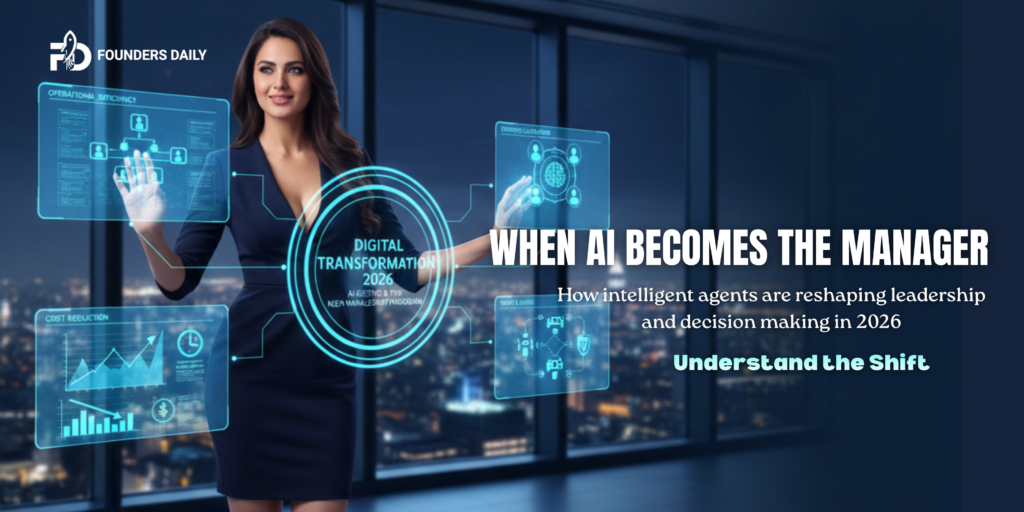
In 2026, digital transformation is no longer about moving workflows to the cloud or adopting another productivity tool. It is about a deeper structural shift inside organizations, one that quietly but fundamentally changes how decisions are made, work is coordinated, and teams are managed. Across global enterprises and fast growing startups alike, AI agents are stepping into roles that were once owned by middle management. This change is not driven by hype or fear, but by economics, speed, and the growing complexity of modern businesses. Leaders are realizing that coordination, reporting, forecasting, and execution oversight can now be handled more efficiently by intelligent systems that never sleep and continuously learn. In this article, you will understand why 2026 digital transformation is accelerating this shift, how AI agents replacing middle management is already happening, what it means for employees and leaders, and how organizations can adapt without losing culture or trust.
Understanding Digital Transformation in 2026
Digital transformation in 2026 looks very different from what it meant even three years ago. Earlier waves focused on automation of tasks, ERP systems, and data dashboards that supported human decision making. Today, the transformation is about delegation of decisions themselves. AI agents are no longer passive tools that generate reports or suggestions. They actively assign tasks, prioritize work, flag risks, and optimize outcomes across teams. This shift is happening because businesses operate in real time markets where delays cost money and human bottlenecks slow growth. As digital transformation strategies mature, companies are moving from tool adoption to organizational redesign powered by artificial intelligence.
What makes 2026 unique is the convergence of data maturity, affordable compute, and trust in AI outputs. Organizations now have years of structured and unstructured data, which allows AI agents to understand context, not just rules. This enables them to perform many functions traditionally handled by middle managers, such as tracking performance, coordinating teams, and enforcing processes. The result is a leaner management layer where decisions flow faster and execution becomes more consistent.
Why Middle Management Became Vulnerable
Middle management emerged as a coordination layer during an era when information moved slowly. Managers collected updates, prepared reports, aligned teams, and escalated decisions upward. In 2026, this model struggles under the weight of constant communication, remote teams, and rapid market changes. Digital transformation has exposed the inefficiencies of manual coordination and repetitive oversight tasks.
AI agents replacing middle management is not about eliminating people, but about removing friction. Many middle management roles revolve around monitoring, scheduling, approvals, and performance tracking. These activities are rule based, data heavy, and repetitive, which makes them ideal for AI systems. As organizations seek profitability and agility, they question why these tasks require human intervention at all. The answer increasingly points toward intelligent automation.
What Are AI Agents and How They Operate
AI agents are autonomous software systems designed to observe, decide, and act within defined boundaries. Unlike traditional automation, they do not follow static scripts. They adapt based on data, feedback, and changing objectives. In a 2026 digital transformation context, AI agents integrate with communication tools, project management platforms, CRM systems, and analytics engines to form a continuous management loop.
For example, an AI agent can monitor project timelines, detect delays, reassign resources, and inform stakeholders without waiting for a weekly meeting. Another agent can analyze sales pipelines, forecast revenue, and recommend pricing adjustments in real time. These capabilities mirror what middle managers have done for decades, but with greater speed and consistency. This is why AI agents replacing middle management is becoming a strategic choice rather than a futuristic experiment.
Real World Examples of AI Agents in Management Roles
Consider a mid sized SaaS company scaling globally in 2026. Earlier, regional managers coordinated sales teams, tracked performance, and reported to leadership. Today, AI agents handle lead distribution, performance monitoring, and incentive optimization across regions. Human leaders focus on strategy, partnerships, and culture, while AI ensures execution discipline.
In manufacturing, AI agents oversee production schedules, inventory levels, and supplier coordination. They respond instantly to disruptions, something human managers cannot always do. In customer support, AI agents prioritize tickets, allocate resources, and even coach human agents using real time feedback. These examples show that digital transformation in 2026 is not theoretical. It is operational and measurable.
Benefits of AI Agents Replacing Middle Management
The primary benefit is speed. Decisions that once took days now happen in minutes. This directly impacts revenue, customer satisfaction, and operational efficiency. Another advantage is consistency. AI agents apply policies uniformly, reducing bias and variability in decision making. This is especially valuable in large organizations where uneven management quality creates risk.
Cost efficiency is another driver. Middle management layers are expensive, and not all roles add strategic value. By reallocating these functions to AI agents, companies free up budgets for innovation and growth. More importantly, leaders gain clearer visibility into operations, as AI systems provide transparent and real time insights. This makes 2026 digital transformation a competitive necessity rather than a trend.
The Human Side of the Shift
Despite the efficiency gains, AI agents replacing middle management raises legitimate concerns about jobs, morale, and identity. Middle managers often act as mentors, conflict resolvers, and cultural carriers. Replacing their administrative functions does not automatically replace these human qualities. Organizations that ignore this risk cultural erosion and disengagement.
Successful digital transformation in 2026 involves redefining roles, not removing people blindly. Many middle managers transition into roles focused on coaching, strategy, and cross functional leadership. AI handles the operational load, while humans focus on empathy, creativity, and judgment. This hybrid model preserves human value while embracing technological progress.
How Organizations Should Prepare
Preparation starts with clarity. Leaders must identify which management activities are operational versus strategic. Tasks like reporting, scheduling, and compliance are ideal candidates for AI agents. Activities involving trust, negotiation, and vision should remain human led. This distinction ensures that AI agents replacing middle management enhances rather than undermines the organization.
Training is equally important. Employees need to understand how AI agents work, what decisions they make, and how to collaborate with them. Transparency builds trust and reduces resistance. Digital transformation in 2026 succeeds when people feel empowered by technology, not threatened by it.
Governance and Ethical Considerations
As AI agents take on management responsibilities, governance becomes critical. Organizations must define accountability clearly. If an AI agent makes a flawed decision, who is responsible. Clear frameworks ensure that automation does not become a blame shifting mechanism.
Ethical considerations also matter. AI agents rely on data, and biased data can lead to unfair outcomes. Regular audits, diverse training datasets, and human oversight are essential. Responsible implementation strengthens trust among employees and stakeholders, reinforcing the long term value of digital transformation.
The Future of Leadership in an AI Managed World
Leadership in 2026 looks less hierarchical and more strategic. With AI agents handling coordination, leaders spend more time on vision, relationships, and long term planning. This shift can be liberating for organizations that embrace it thoughtfully.
AI agents replacing middle management does not eliminate leadership. It refines it. Leaders become architects of systems rather than supervisors of tasks. This evolution aligns with the broader goals of digital transformation, where technology amplifies human potential instead of constraining it.
Conclusion
The rise of AI agents replacing middle management is one of the most defining aspects of 2026 digital transformation. It reflects a broader shift toward faster, smarter, and more adaptive organizations. While the technology is powerful, its success depends on thoughtful implementation that respects human strengths. Companies that balance efficiency with empathy will not only survive this transition but lead their industries. The future of work is not about humans versus AI. It is about designing organizations where both thrive together.