Introduction
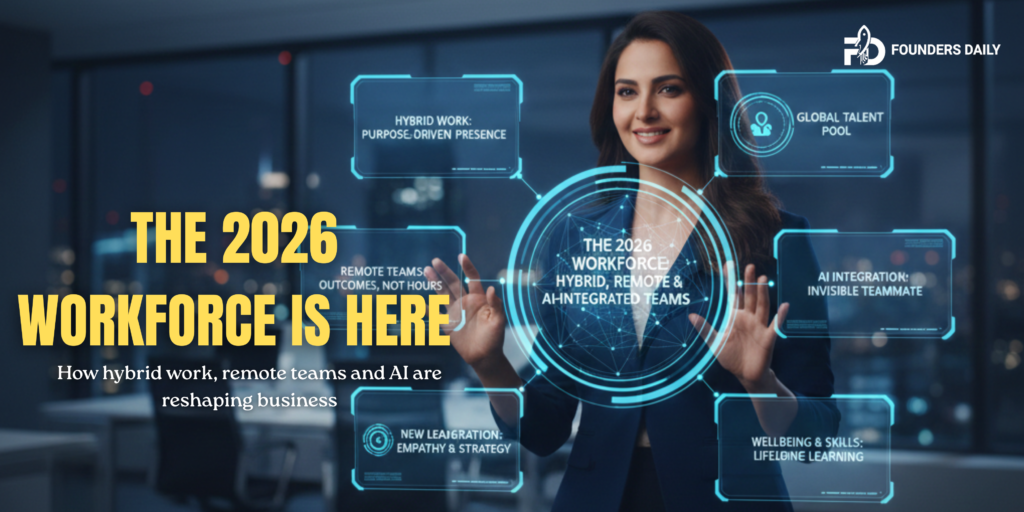
The way people work has changed more in the last five years than it did in the previous fifty. As businesses step into 2026, the traditional nine-to-five office model feels outdated for many industries. The modern workforce is now shaped by three powerful forces working together: hybrid work, remote teams, and deep AI integration. What once started as a temporary adjustment has now become a permanent transformation. Companies that understand this shift are building stronger, more flexible teams, while those resisting change are struggling to attract talent and stay competitive. This article explores how the 2026 workforce is evolving, why hybrid and remote models are becoming the norm, and how AI is quietly becoming an invisible teammate across organizations.
How the Workforce Evolved to This Point
The global shift towards flexible work did not happen overnight. It was driven by a combination of technology maturity, employee expectations, and economic realities. High-speed internet, cloud platforms, and collaboration tools removed geographical barriers long before companies fully embraced remote work. When organizations were forced to adapt quickly, they discovered something unexpected. Productivity did not collapse. In many cases, it improved. Employees saved time otherwise spent commuting, while businesses reduced overhead costs. By 2026, this realization has matured into a more structured workforce strategy where flexibility is not chaos, but a carefully designed system.
What makes the 2026 workforce different is intention. Hybrid and remote work are no longer reactive decisions. They are deliberate choices supported by policies, tools, and leadership frameworks. Companies are no longer asking whether flexible work is possible. They are asking how to optimize it for performance, culture, and long-term growth.
Hybrid Work as the New Default Model
Hybrid work has emerged as the most balanced approach for many organizations. It offers the structure of physical offices and the freedom of remote work without forcing employees into extremes. In 2026, hybrid work is not about fixed days in the office. It is about purpose-driven presence. Teams come together physically for collaboration, strategy, and relationship-building, while individual work is often done remotely.
Large enterprises and fast-growing startups alike are designing offices as collaboration hubs rather than attendance centers. Meetings, brainstorming sessions, and innovation workshops happen in person, while focused tasks are completed wherever employees are most productive. This model respects different working styles and creates a healthier relationship between work and personal life. It also allows companies to hire talent beyond their immediate location, giving them access to a broader and more diverse workforce.
The Reality of Fully Remote Teams in 2026
While hybrid work dominates many industries, fully remote teams are thriving in others. Technology companies, digital agencies, consulting firms, and content-driven businesses are increasingly operating without physical offices at all. In 2026, remote work is no longer associated with isolation or lack of accountability. Instead, it is built on systems, trust, and clear communication.
Successful remote teams focus heavily on outcomes rather than hours. Performance is measured by results, not visibility. Leaders invest in asynchronous communication, allowing teams across time zones to collaborate without burnout. Clear documentation, structured workflows, and transparent expectations replace constant meetings. This shift has allowed remote-first companies to scale faster and remain resilient during economic uncertainty.
AI as a Silent Workforce Partner
Artificial intelligence has quietly become one of the most influential members of the 2026 workforce. AI does not replace teams entirely, but it reshapes how work is done at every level. From recruitment and onboarding to project management and performance analysis, AI tools are deeply integrated into daily operations. These systems help managers make data-driven decisions while reducing manual workload.
In hybrid and remote environments, AI plays a crucial role in maintaining efficiency. Intelligent scheduling tools optimize meeting times across time zones. AI-powered analytics track productivity trends without micromanagement. Customer support teams rely on AI assistants to handle routine queries, allowing human agents to focus on complex issues. This integration makes teams faster, smarter, and more adaptable.
Redefining Leadership in the AI-Driven Workplace
Leadership in 2026 looks very different from traditional management models. Command-and-control approaches are ineffective in distributed teams. Modern leaders focus on clarity, trust, and empowerment. They use AI insights to support decisions but rely on human judgment to lead people. Emotional intelligence has become as important as technical expertise.
Managers are expected to guide rather than supervise. They set clear goals, remove obstacles, and ensure alignment across teams. AI provides real-time insights into performance and engagement, but it is the leader’s responsibility to interpret this data with empathy. The most successful organizations understand that technology enhances leadership, but it cannot replace human connection.
Employee Experience and Wellbeing in the New Workforce
One of the defining characteristics of the 2026 workforce is the focus on employee experience. Hybrid and remote models have blurred the boundaries between work and personal life, making wellbeing a critical priority. Companies are investing in mental health support, flexible schedules, and wellness programs that adapt to individual needs.
AI-driven tools now help identify early signs of burnout by analyzing work patterns and engagement levels. Instead of reacting to resignations, organizations can intervene early with support and adjustments. This proactive approach has become a competitive advantage in talent retention. Employees are more loyal to companies that respect their time, health, and autonomy.
Skills That Matter Most in 2026
As AI takes over repetitive tasks, human skills have gained greater importance. Communication, adaptability, creativity, and critical thinking are now essential across roles. Employees are expected to work comfortably with digital tools while continuously learning new skills. Lifelong learning is no longer optional. It is a survival strategy in a rapidly changing job market.
Organizations are responding by investing in upskilling programs and digital learning platforms. Instead of hiring for fixed roles, companies are building adaptable teams capable of evolving with technology. This mindset allows businesses to remain competitive while giving employees a sense of long-term growth and stability.
Challenges Businesses Still Face
Despite the advantages, the hybrid and AI-integrated workforce is not without challenges. Maintaining company culture across distributed teams requires intentional effort. Miscommunication can arise when teams rely too heavily on digital tools without clear processes. Data privacy and ethical AI usage are also growing concerns.
However, companies that address these challenges early tend to outperform others. Clear policies, ethical AI frameworks, and consistent communication practices help create stability. The most successful organizations treat workforce transformation as an ongoing journey rather than a one-time change.
The Future Outlook for Businesses and Founders
For founders and business leaders, the 2026 workforce presents both opportunity and responsibility. Flexible work models allow faster scaling and global expansion, but they demand stronger systems and leadership maturity. AI can drive efficiency, but it requires thoughtful implementation to avoid over-automation and disengagement.
Businesses that align technology with human values are building sustainable growth models. They are attracting top talent, improving productivity, and adapting quickly to market changes. In an uncertain global economy, this adaptability is one of the strongest competitive advantages a company can have.
Conclusion
The 2026 workforce is defined by flexibility, technology, and trust. Hybrid and remote work are no longer trends but foundational elements of modern business. AI has become an invisible partner that enhances productivity and decision-making without replacing the human core of organizations. Companies that embrace this transformation with clarity and empathy are setting themselves up for long-term success. The future of work is not about where people sit, but how effectively they collaborate, innovate, and grow together.