Introduction
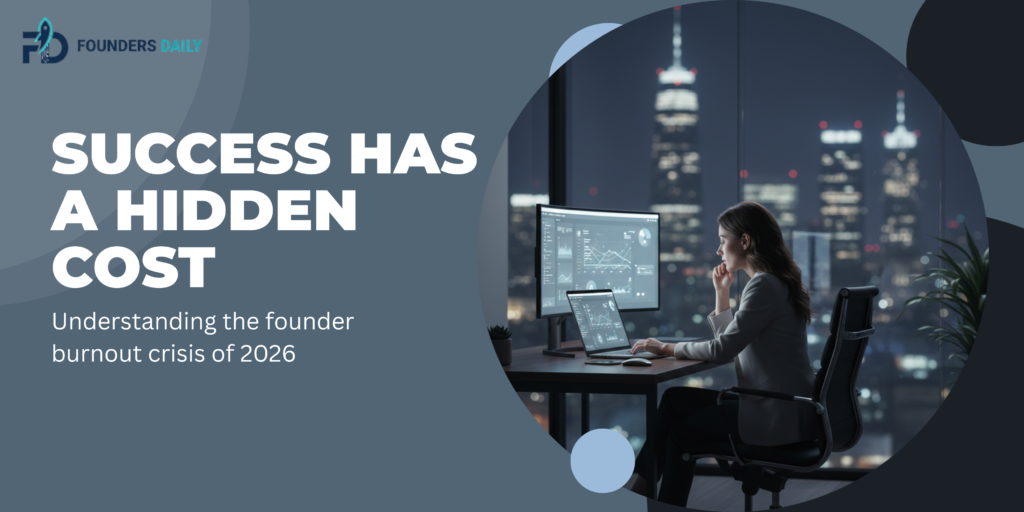
For years, burnout was spoken about quietly in founder circles, often dismissed as a temporary phase or a badge of honor. Long nights, constant pressure, and personal sacrifice were seen as the price of success. But as we approach 2026, something deeper and more concerning is happening. The 2026 founder burnout wave is emerging as a serious challenge that founders, investors, and ecosystems can no longer ignore.
Today’s founders are building in an environment that is more complex than ever before. Competition is global, expectations are instant, capital is cautious, and technology is evolving faster than most humans can keep up with. Social media glorifies hustle, while reality demands emotional resilience, mental clarity, and long-term stamina. Many founders feel stretched thin, even when their businesses appear successful from the outside.
In this article, we will explore what the 2026 founder burnout wave really means, why it is accelerating, how it is impacting startups and leadership, and most importantly, how founders can navigate this phase without losing themselves or their vision. If you are a founder, operator, or aspiring entrepreneur, this is a conversation worth having now, not later.
What Is the 2026 Founder Burnout Wave
Understanding Burnout in the Modern Founder Era
Burnout is not just feeling tired or stressed. It is a state of emotional, mental, and physical exhaustion caused by prolonged pressure without adequate recovery. The 2026 founder burnout wave refers to a growing pattern where founders experience chronic fatigue, decision paralysis, loss of motivation, and emotional detachment from the very businesses they created.
Unlike earlier startup eras, founders today are expected to be visionaries, operators, marketers, fundraisers, content creators, and culture builders all at once. The constant switching between roles drains cognitive energy over time. When combined with financial uncertainty and public scrutiny, burnout becomes almost inevitable if left unchecked.
Why This Wave Is Different From Before
Founder burnout has existed for decades, but the scale and intensity in 2026 are different. The always-on digital culture leaves little room for mental rest. Messages, metrics, and market updates never stop. Even during personal time, founders remain mentally tethered to their businesses.
Additionally, the rise of solo founders and lean teams means fewer people share the emotional load. While technology enables speed, it also increases expectations. This creates a perfect storm that fuels the 2026 founder burnout wave across industries.
Why Founder Burnout Is Accelerating Toward 2026
The Pressure of Constant Visibility
One major driver of the 2026 founder burnout wave is constant visibility. Founders are no longer working quietly behind the scenes. They are expected to be active on LinkedIn, Twitter, podcasts, and industry events. While personal branding has benefits, it also creates pressure to perform, even when things are not going well internally.
This visibility often leads to comparison. Founders compare funding rounds, growth numbers, and public milestones, forgetting that social media rarely shows the full story. Over time, this comparison erodes confidence and increases stress.
Capital, Uncertainty, and Long Decision Cycles
Funding environments have become more cautious. Founders spend months pitching, negotiating, and revising strategies, often without clear outcomes. This uncertainty weighs heavily on mental health. When personal finances are tied closely to business success, the emotional stakes rise dramatically.
The 2026 founder burnout wave is partly fueled by this prolonged uncertainty. Even resilient founders struggle when effort does not immediately translate into progress or stability.
How Burnout Shows Up in Founders
Emotional and Mental Warning Signs
Burnout rarely arrives overnight. It builds quietly. Founders may notice irritability, difficulty focusing, or a sense of numbness toward achievements that once felt exciting. Decision-making becomes harder, and self-doubt creeps in more frequently.
Many founders describe feeling disconnected from their original purpose. This emotional distance is a core symptom of the 2026 founder burnout wave and often goes unnoticed until it affects performance and relationships.
Physical and Behavioral Changes
Burnout also manifests physically. Sleep issues, frequent headaches, weakened immunity, and chronic fatigue become common. Some founders cope through overwork, while others withdraw completely.
Behaviorally, burnout can lead to avoidance of key responsibilities, missed opportunities, or strained team dynamics. These changes are not signs of weakness. They are signals that something needs attention.
The Hidden Cost of Founder Burnout on Startups
Impact on Company Culture and Teams
Founders set the emotional tone of their organizations. When a founder is burned out, it often trickles down to the team. Communication becomes reactive, patience shortens, and clarity suffers.
The 2026 founder burnout wave is already influencing company cultures. Teams sense when leadership is overwhelmed, which can reduce morale and trust. Over time, this affects retention and performance.
Long Term Strategic Consequences
Burnout does not just affect day-to-day operations. It impacts long-term thinking. Burned-out founders tend to avoid bold decisions, delay innovation, or pivot too frequently in search of relief.
This strategic inconsistency can slow growth or derail promising ventures. In extreme cases, founders walk away from businesses that could have succeeded with better support and pacing.
Real Stories Behind the 2026 Founder Burnout Wave
The High Growth Startup That Almost Collapsed
Consider a SaaS founder who scaled rapidly with a small team. Revenue grew, users increased, and investors showed interest. From the outside, everything looked perfect. Internally, the founder worked nonstop, handled every decision, and avoided delegation.
Within two years, exhaustion set in. Creativity declined, relationships suffered, and motivation disappeared. Only after stepping back and restructuring responsibilities did recovery begin. Stories like this are increasingly common within the 2026 founder burnout wave.
Solo Founders and Silent Struggles
Solo founders face unique challenges. Without co-founders to share pressure, emotional isolation becomes a real risk. Many solo founders hesitate to admit burnout, fearing it reflects poorly on their competence.
The 2026 founder burnout wave highlights the need for stronger founder communities where vulnerability is normalized rather than hidden.
The Role of Technology in Founder Burnout
How Technology Helps and Hurts
Technology is a double-edged sword. Automation, AI tools, and analytics improve efficiency, but they also increase expectations. Founders feel compelled to move faster simply because tools make it possible.
The constant influx of data can overwhelm rather than empower. Without clear boundaries, technology contributes significantly to the 2026 founder burnout wave.
Using AI and Systems to Reduce Burnout
When used intentionally, technology can reduce burnout. AI tools that handle repetitive tasks, data analysis, and operational workflows free founders to focus on strategy and creativity.
Founders who treat technology as support rather than pressure tend to maintain better mental balance. The key lies in conscious adoption rather than reactive usage.
Preventing and Navigating Founder Burnout in 2026
Redefining Success and Pace
One powerful way to counter the 2026 founder burnout wave is redefining success. Sustainable growth often outperforms explosive growth in the long run. Founders who set realistic timelines and boundaries protect both their businesses and their health.
Slowing down strategically is not failure. It is leadership maturity.
Building Support Systems Early
Founders need support beyond professional advisors. Peer groups, mentors, coaches, and even therapy play important roles in mental resilience. Talking openly about challenges reduces isolation and normalizes the founder experience.
The most resilient founders invest in relationships as intentionally as they invest in products.
The Investor and Ecosystem Responsibility
Changing the Narrative Around Hustle
Investors and accelerators influence founder behavior significantly. When hustle is glorified without regard for sustainability, burnout accelerates. The 2026 founder burnout wave calls for a cultural shift where long-term founder health is valued alongside returns.
Some investors are already prioritizing founder wellbeing as a metric of business health. This shift is encouraging and necessary.
Designing Healthier Startup Environments
Startup ecosystems can play a role by offering mental health resources, realistic growth frameworks, and safe spaces for honest conversations. Burnout prevention is not just an individual responsibility. It is a systemic one.
Conclusion
The 2026 founder burnout wave is a wake-up call for the startup world. It reminds us that behind every company is a human being with limits, emotions, and needs. Sustainable success is not built on exhaustion. It is built on clarity, balance, and resilience.
If you are a founder reading this, pause for a moment. Reflect not just on your business goals, but on your personal wellbeing. The future of entrepreneurship depends not only on innovation, but on founders who are healthy enough to lead it forward.