
Introduction
Healthcare is quietly going through one of the biggest transformations in its history. If you step inside a modern hospital today, you will notice that medicine is no longer just about doctors, diagnoses, and treatment. It is about speed, technology, patient experience, and intelligent decision-making. This shift is not happening in isolation. It is being powered by a new force that is rapidly reshaping the industry, healthcare startups.
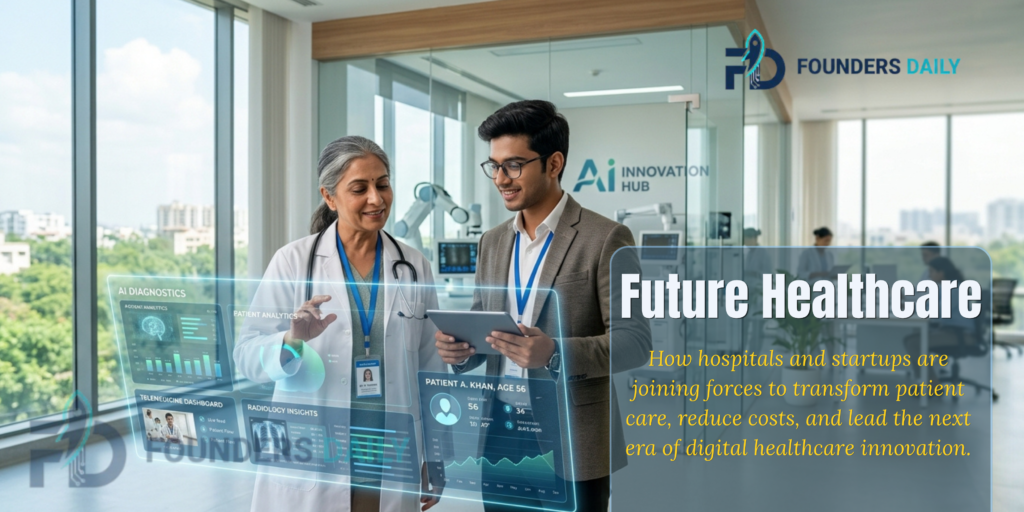
The reality is that traditional hospitals are under immense pressure. Rising operational costs, growing patient expectations, and the need for digital transformation are forcing them to rethink how they function. At the same time, startups are building fast, scalable, and highly innovative solutions that directly solve these challenges. This is exactly why traditional hospitals will partner with startups more aggressively in 2026 and beyond.
In this article, you will understand the deeper reasons behind this shift, the real business logic driving these partnerships, and how this collaboration is shaping the future of healthcare globally. If you are a founder, healthcare professional, or investor, this insight will help you understand where the industry is heading and what decisions will matter next.
Also Read: The Healthcare Startup Models That Will Win in 2026
The Healthcare Industry Is Entering a New Era
The healthcare industry is no longer operating in a slow and predictable environment. Instead, it is evolving at a pace that many traditional institutions are struggling to keep up with. Patients today expect the same level of convenience from hospitals that they receive from digital platforms. They want faster appointments, real-time updates, digital records, and personalized care experiences.
Traditional hospitals were not built for this kind of demand. Most of their systems were designed decades ago and have only been upgraded in parts over time. These legacy systems often create inefficiencies, delays, and communication gaps. On the other side, healthcare startups are built from the ground up with modern technology, data-driven insights, and user-first design.
This gap between expectation and capability is one of the biggest reasons why traditional hospitals will partner with startups. Hospitals need speed and innovation, and startups already have both.
Why Traditional Hospitals Will Partner With Startups for Survival and Growth
At a strategic level, this partnership is no longer optional. It is becoming a survival strategy. Hospitals cannot afford to spend years building internal technology teams and developing digital solutions from scratch. The cost is high, the risk is significant, and the speed is too slow for today’s market.
Startups, however, are solving highly specific problems in healthcare with precision. Whether it is AI-based diagnostics, telemedicine platforms, or patient engagement apps, these solutions are already tested and improving rapidly. By collaborating with startups, hospitals can adopt innovation instantly instead of building it over time.
Another important factor is competition. New-age health platforms are entering the market and attracting patients with convenience and affordability. If traditional hospitals do not evolve, they risk losing a significant share of their patient base. This competitive pressure is accelerating the trend, making it clear why traditional hospitals will partner with startups as a long-term growth strategy.
Digital Transformation Is Driving Hospital Startup Collaboration
Digital transformation in healthcare is no longer a future concept. It is happening right now. From electronic health records to remote consultations, every aspect of healthcare is becoming digital. However, implementing digital transformation inside traditional hospitals is complex and time-consuming.
Many hospitals struggle with system integration, data migration, and staff training. These challenges slow down progress and increase costs. This is where startups play a crucial role. They build flexible and scalable solutions that can integrate with existing hospital systems without disrupting operations.
For example, telemedicine startups are enabling hospitals to consult patients remotely, reducing overcrowding and improving access to care. Similarly, data analytics startups are helping hospitals make better clinical and operational decisions. These real-world applications clearly show why traditional hospitals will partner with startups to accelerate digital transformation.
Improving Patient Experience Through Innovation
Patient experience has become one of the most important factors in healthcare. Today’s patients are more informed, more connected, and more demanding than ever before. They expect transparency, convenience, and personalized care at every step of their journey.
Traditional hospitals often struggle to deliver this experience due to outdated processes and limited digital capabilities. Long waiting times, lack of communication, and fragmented systems create frustration for patients. Startups are solving these problems by building user-friendly digital platforms that simplify the entire healthcare journey.
From appointment booking apps to AI-powered chat support, these innovations are transforming how patients interact with hospitals. When traditional hospitals partner with startups, they can quickly enhance their patient experience without overhauling their entire system. This improvement not only increases patient satisfaction but also builds long-term trust and loyalty.
Cost Reduction and Operational Efficiency
Running a hospital is a complex and expensive operation. Every inefficiency directly impacts profitability and quality of care. Managing staff schedules, inventory, patient flow, and administrative tasks requires significant effort and coordination.
Startups are introducing automation and intelligent systems that optimize these operations. AI-driven scheduling tools can reduce idle time for doctors. Smart inventory systems can ensure that medical supplies are always available without overstocking. Automated billing and documentation systems can reduce administrative burden.
By adopting these solutions, hospitals can significantly reduce operational costs while improving efficiency. This financial advantage is another major reason why traditional hospitals will partner with startups in the coming years.
Access to Advanced Technologies Without High Risk
Healthcare is witnessing rapid innovation in areas like artificial intelligence, wearable devices, and predictive analytics. However, adopting these technologies involves risk, especially for traditional institutions that must maintain high standards of safety and compliance.
Startups act as innovation labs for the healthcare industry. They experiment, iterate, and refine new technologies at a much faster pace. Hospitals can observe these developments and adopt proven solutions through partnerships.
This approach allows hospitals to stay ahead of technological trends without taking unnecessary risks. It also ensures that they remain competitive in a rapidly evolving market. This dynamic further explains why traditional hospitals will partner with startups to future-proof their operations.
Data-Driven Healthcare and Better Decision Making
One of the most valuable assets in healthcare today is data. Hospitals generate massive amounts of information, from patient records to treatment outcomes. However, most of this data remains underutilized.
Startups are leveraging artificial intelligence and machine learning to convert this data into actionable insights. These insights can improve diagnosis accuracy, predict patient needs, and optimize resource allocation.
For example, predictive analytics can help identify patients who are at risk of developing serious conditions, enabling early intervention. This not only improves patient outcomes but also reduces long-term treatment costs.
When traditional hospitals partner with startups, they unlock the true potential of their data. This transformation from reactive care to proactive care is one of the most significant shifts in modern healthcare.
Bridging Talent Gaps and Enhancing Workforce Productivity
Healthcare systems around the world are facing a shortage of skilled professionals. Doctors, nurses, and administrative staff are often overworked, leading to burnout and reduced efficiency.
Startups are addressing this challenge by building tools that enhance human capabilities. AI-assisted diagnostics can support doctors in making faster and more accurate decisions. Automation can handle repetitive administrative tasks, freeing up time for healthcare professionals to focus on patient care.
This collaboration not only improves productivity but also enhances the quality of care. It creates a more balanced and sustainable working environment for healthcare professionals.
Real-World Momentum Behind Hospital Startup Partnerships
Across global and Indian markets, the trend is already visible. Large hospital chains are actively collaborating with health tech startups to implement digital solutions and expand their services. Telemedicine platforms are helping hospitals reach patients in remote areas. AI-based tools are assisting in faster diagnosis and treatment planning.
In India, this collaboration is especially important due to the scale and diversity of the population. Startups are enabling hospitals to deliver affordable and accessible healthcare to millions of people. This growing momentum reinforces the idea that traditional hospitals will partner with startups not just as an experiment, but as a core strategy.
Challenges in Collaboration and How They Are Being Solved
While the benefits are clear, these partnerships are not without challenges. Differences in culture and working style can create friction. Hospitals tend to be cautious and process-driven, while startups operate with speed and flexibility.
Integration with existing systems can also be complex. Data privacy and regulatory compliance remain critical concerns. However, these challenges are being addressed through better communication, clear agreements, and improved technology frameworks.
As both sides gain experience, these collaborations are becoming smoother and more effective. The initial barriers are gradually turning into structured processes that support long-term partnerships.
The Future of Healthcare Belongs to Collaboration
The future of healthcare will not be defined by hospitals or startups alone. It will be defined by how well they work together. Hospitals bring trust, infrastructure, and patient relationships. Startups bring innovation, speed, and new perspectives.
This combination has the potential to create a healthcare system that is more efficient, more accessible, and more patient-centric. It is not just about adopting technology. It is about reimagining how healthcare is delivered.
The question is no longer whether traditional hospitals will partner with startups. The real question is how quickly they can build these partnerships and how effectively they can use them to create value.
Also Read: The Future of Digital-First Healthcare in India and What It Means for Founders in 2026
Conclusion
Healthcare is evolving faster than ever, and traditional models are no longer enough to keep up with modern demands. Innovation is becoming the foundation of better care, and startups are leading this transformation with speed and precision.
This is exactly why traditional hospitals will partner with startups in the coming years. It is not just a strategic move. It is a necessity for survival, growth, and relevance in a competitive market.
For hospitals, this partnership means faster transformation and improved patient care. For startups, it means scale, credibility, and real-world impact. And for patients, it means a smarter, more connected healthcare system that truly puts their needs first.
If you are part of this ecosystem, this is the moment to pay attention, adapt, and take action. The future of healthcare is already being built through these collaborations.