Introduction
In the startup world, we often celebrate speed, ambition, and relentless execution. We admire founders who work late nights, juggle ten decisions before breakfast, and keep pushing even when the odds are stacked against them. Yet behind this popular image of hustle lies a quieter truth that more leaders are beginning to recognize. Founder mental health is a competitive advantage, not a personal weakness or a soft topic reserved for weekends and retreats. In 2026, when markets shift faster than ever and competition is global from day one, the psychological strength of a founder directly shapes company outcomes.
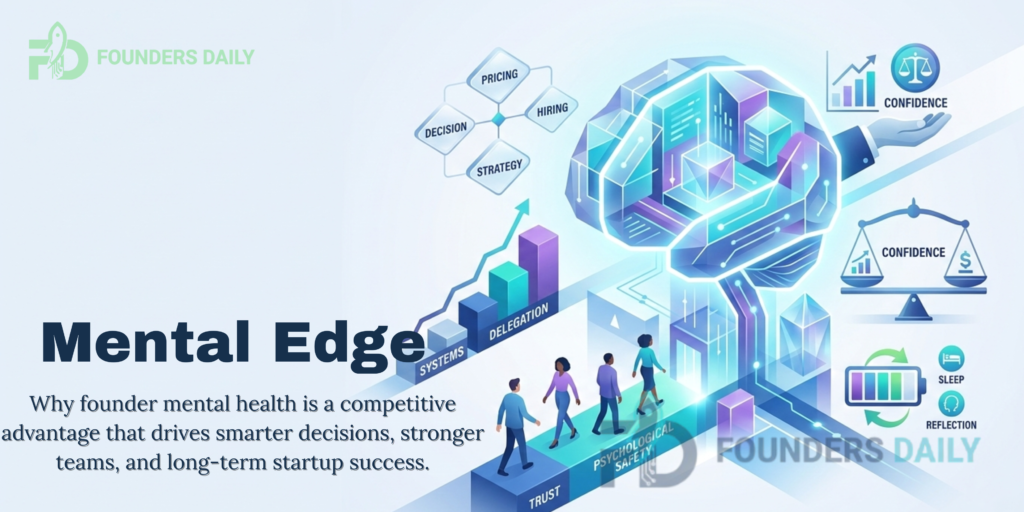
Many founders start their journey believing stress is simply the cost of ambition. They normalize anxiety, decision fatigue, and emotional isolation, assuming these feelings will disappear after the next funding round or milestone. Instead, pressure often increases. Over time, untreated mental strain affects judgment, relationships, and long term vision. This article explains why founder mental health is a competitive advantage, how it influences leadership and performance, and what practical steps founders can take to protect it. By the end, you will see mental health not as a personal issue but as a strategic business asset.
The Hidden Pressure Founders Carry Every Day
Being a founder means living with constant uncertainty. Revenue forecasts change, investors ask difficult questions, and teams look to the founder for clarity even when the future feels unclear. Unlike employees, founders rarely get to mentally switch off. The responsibility follows them home, into weekends, and even into moments that should feel restful.
Founder mental health is a competitive advantage because it determines how leaders respond under pressure. A founder who is mentally exhausted tends to react emotionally, rush decisions, or avoid hard conversations. Over time, this behavior shapes company culture. Teams sense anxiety at the top and mirror it in their own work. Missed opportunities and internal friction often trace back to a founder who is running on empty.
In contrast, founders who actively protect their mental wellbeing develop steadier emotional control. They listen better, think more clearly, and communicate with intention. These qualities may sound subtle, but in high stakes environments they separate resilient companies from those that burn out early.
Also Read: AI Will Not Replace You. But Someone Using AI Will.
Why Founder Mental Health Is a Competitive Advantage in 2026
The business environment in 2026 rewards clarity more than brute force. Automation, artificial intelligence, and global access to tools have leveled many operational advantages. What cannot be easily copied is the quality of leadership decisions made under pressure.
Founder mental health is a competitive advantage because it supports sustained high quality decision making. When a founder is mentally balanced, they can process complex information without panic. They recognize patterns, consider second order effects, and choose actions aligned with long term strategy rather than short term relief.
Healthy founders also recover faster from setbacks. Every startup faces failures, from product missteps to hiring mistakes. Mental resilience allows founders to learn quickly without internalizing failure as personal defeat. This mindset keeps momentum alive and prevents one bad quarter from derailing years of effort.
The Link Between Mental Health and Decision Quality
Decision making is the core job of a founder. From pricing models to hiring leaders, each choice compounds over time. Founder mental health is a competitive advantage because mental strain narrows perspective. Stress triggers survival thinking, where the brain focuses on immediate threats instead of creative solutions.
A founder under chronic stress may overcontrol teams, avoid delegation, or delay necessary changes. These behaviors are rarely conscious. They feel logical in the moment but often lead to bottlenecks and missed growth opportunities. Over time, the company slows while competitors move faster.
Founders with strong mental health operate differently. They pause before reacting. They ask better questions and invite diverse opinions. Because their identity is not constantly under threat, they can separate ego from evidence. This clarity shows up in cleaner strategies and more confident execution.
How Founder Mental Health Shapes Company Culture
Culture is not defined by posters on office walls. It is defined by daily behaviors modeled by leadership. Founder mental health is a competitive advantage because the emotional state of a founder quietly sets the tone for the entire organization.
When founders are anxious and overwhelmed, teams sense instability. Communication becomes reactive, priorities shift without explanation, and trust erodes. Employees may become cautious, focusing on self protection rather than innovation. This environment discourages initiative and honest feedback.
On the other hand, mentally healthy founders create psychological safety. They admit uncertainty without panic and encourage open discussion. Teams feel safe to experiment and learn from mistakes. Over time, this culture attracts stronger talent and reduces attrition, both of which directly impact business performance.
Burnout Is Not a Badge of Honor
For years, startup culture glorified burnout as proof of commitment. Long hours and constant stress were seen as rites of passage. In reality, burnout is a warning sign. Founder mental health is a competitive advantage precisely because burnout destroys the capacity to lead effectively.
Burnout reduces empathy, patience, and creativity. Founders experiencing it may withdraw emotionally or become irritable. Relationships with cofounders and teams suffer. Strategic thinking declines, and the company enters a cycle of firefighting rather than growth.
Recognizing burnout early allows founders to intervene before damage spreads. Recovery does not mean abandoning ambition. It means restructuring work, seeking support, and building systems that sustain energy rather than consume it.
Investor Perspective on Founder Mental Health
Investors are increasingly aware that founder mental health affects returns. A mentally exhausted founder is a business risk, even if the product looks strong on paper. Founder mental health is a competitive advantage because it signals longevity and adaptability.
In private conversations, many investors admit they now evaluate emotional resilience alongside vision and execution ability. Founders who demonstrate self awareness, boundary setting, and reflective thinking inspire greater confidence. These traits suggest the founder can navigate downturns and leadership transitions without collapsing under pressure.
As capital becomes more selective, mentally resilient founders stand out. They communicate challenges clearly, accept feedback, and adjust strategy without defensiveness. This maturity builds trust, which often matters as much as traction during uncertain markets.
Mental Health and the Ability to Scale
Scaling a company requires founders to let go of control and trust others. Founder mental health is a competitive advantage because insecurity and anxiety make delegation feel dangerous. Founders may fear that mistakes reflect their own inadequacy.
This mindset keeps decision making centralized and slows growth. Teams wait for approvals, and opportunities pass by. Over time, the founder becomes the bottleneck rather than the catalyst.
Mentally healthy founders understand that mistakes are part of scale. They invest in systems, hire leaders, and allow space for learning. Because their self worth is not tied to being involved in every detail, they build organizations that operate independently and sustainably.
Practical Habits That Strengthen Founder Mental Health
Founder mental health is a competitive advantage when it is treated as an ongoing practice rather than a one time fix. Simple habits, practiced consistently, create long term resilience.
Regular reflection helps founders process stress instead of carrying it silently. This may involve journaling, coaching conversations, or quiet thinking time. Physical routines like exercise and sleep are not luxuries. They stabilize mood and cognitive function, directly improving leadership capacity.
Equally important is social support. Founders often feel isolated because they cannot share doubts with their teams. Peer groups, mentors, or therapists provide safe spaces to think aloud. These conversations reduce emotional load and prevent small concerns from becoming overwhelming.
Redefining Strength in Leadership
Traditional leadership narratives equate strength with toughness and emotional distance. In reality, founder mental health is a competitive advantage because true strength includes self awareness and emotional regulation.
Founders who acknowledge their limits model healthy behavior for their teams. They normalize asking for help and create environments where people bring their full selves to work. This authenticity builds loyalty and engagement, which are difficult for competitors to replicate.
Redefining strength also allows founders to grow. Instead of repeating the same coping patterns, they evolve as leaders. This adaptability becomes critical as companies move from early chaos to structured scale.
Founder Mental Health and Long Term Vision
Vision requires imagination. It requires the ability to think beyond immediate problems and see possibilities others miss. Founder mental health is a competitive advantage because chronic stress narrows imagination.
When founders are mentally well, they can step back from daily noise and reconnect with purpose. They revisit why the company exists and where it should go next. This clarity guides strategy and inspires teams during challenging periods.
Long term vision is not built during emergencies. It emerges from moments of mental space. Protecting mental health creates that space, allowing founders to lead with intention rather than reaction.
The Cost of Ignoring Mental Health
Ignoring mental health does not make problems disappear. It simply delays their impact until they show up as poor decisions, broken relationships, or health crises. Founder mental health is a competitive advantage because neglecting it quietly drains performance.
Many founders only confront mental health after a major breakdown. At that point, recovery is harder and consequences are already visible. Teams lose confidence, momentum slows, and reputations suffer.
Addressing mental health early prevents these outcomes. It allows founders to course correct before damage spreads. In competitive markets, prevention often determines who survives and who fades.
Also Read: ConvoZen Unveils End-to-End Conversational AI Stack, Indigenous Speech Models
Mental Health as Part of Business Strategy
In 2026, leading founders treat mental health as part of strategy, not an afterthought. Founder mental health is a competitive advantage because it underpins execution, culture, and adaptability.
This strategic approach includes designing workloads that are intense but sustainable. It involves setting realistic expectations with investors and teams. It also means investing in personal growth alongside business metrics.
When founders integrate mental health into how they operate, they create companies that can endure volatility. These organizations move faster not because they push harder, but because they think clearer.
Conclusion
Founder mental health is no longer a private concern hidden behind success stories. It is a strategic asset that shapes how companies grow, adapt, and survive. In an era defined by rapid change and constant pressure, founder mental health is a competitive advantage that cannot be ignored.
Founders who invest in their mental wellbeing lead with clarity, build resilient cultures, and make decisions that compound over time. The question is no longer whether mental health matters, but whether founders are willing to treat it as seriously as any other part of the business. The strongest advantage in the years ahead may not be technology or capital, but the clarity of the mind leading the company.